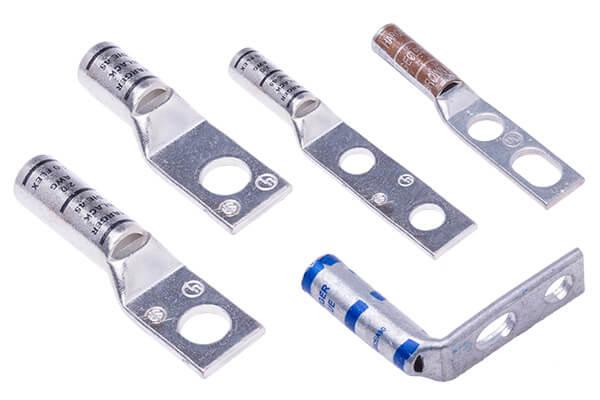




Color Coded Compression Lugs Guide to Safer Wiring
Discover how color coded compression lugs improve electrical safety zero error wiring UL 486A standards and Xluig innovation
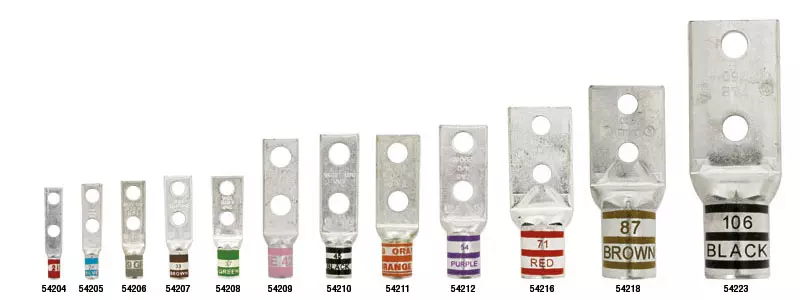
Decoding the Color System: The UL 486A Standard
Electrical safety relies on absolute precision, not guesswork. The UL 486A color standards serve as the universal language for industrial wiring, ensuring that every connection meets rigorous safety benchmarks. This system is not merely aesthetic; it is a critical engineering control designed to standardize how installers match connectors to conductors across global markets. By adhering to these strict protocols, we ensure that every termination maintains mechanical strength and electrical integrity under load.
Compression Lug Color Coding & Die Index Chart (AWG & Metric)
| Wire Size (AWG/MCM) | Wire Size (mm²) | Color Code (UL Standard) | Die Index / Code | Xluig Catalog Ref |
| 14 – 10 AWG | 2.5 – 6 mm² | Yellow | Yellow | 14-10# Yellow |
| 8 AWG | 10 mm² | Red | 21 / Red | 8 AWG Red |
| 6 AWG | 16 mm² | Blue | 24 / Blue | 6 AWG Blue |
| 4 AWG | 25 mm² | Grey | 29 / Grey | 4 AWG Grey |
| 2 AWG | 35 mm² | Brown | 33 / Brown | 2 AWG Brown |
| 1 AWG | 50 mm² | Green | 37 / Green | 1 AWG Green |
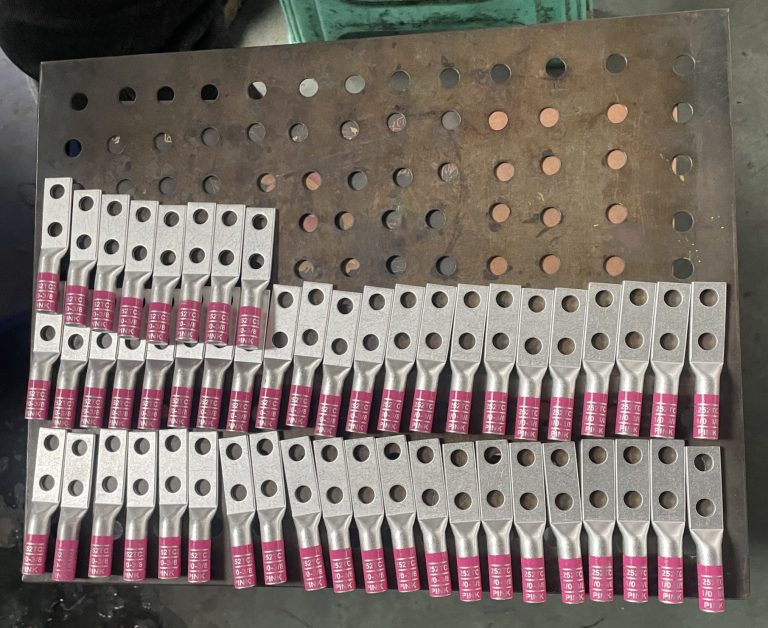
| 1/0 AWG | 50 – 60 mm² | Pink | 42 / Pink | 1/0 AWG Pink |
| 2/0 AWG | 70 mm² | Black | 45 / Black | 2/0 AWG Black |
| 3/0 AWG | 95 mm² | Orange | 50 / Orange | 3/0 AWG Orange |
| 4/0 AWG | 120 mm² | Purple | 54 / Purple | 4/0 AWG Purple |
| 250 MCM | 150 mm² | Yellow | 62 / Yellow | 250 MCM Yellow |
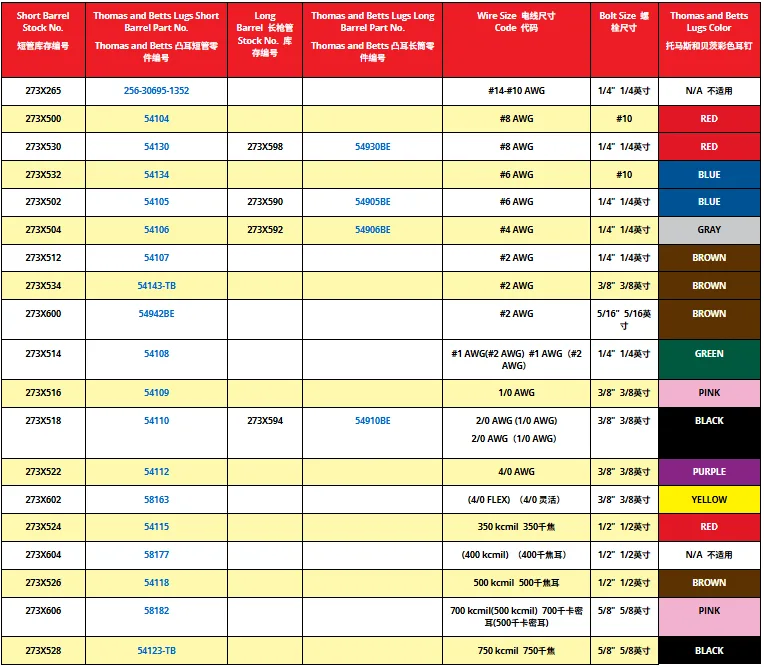
The Logic Behind Industrial Color Coding
In high-pressure industrial environments, speed cannot come at the expense of accuracy. The logic behind the color system is to create an immediate visual link between the wire, the connector, and the installation tool. By matching the color of the lug barrel to the corresponding crimping die, installers create a fail-safe mechanism. This eliminates the risk of under-crimping or over-crimping, transforming a complex technical selection process into a simple, verifiable visual match for quick identification terminals.
AWG Size to Color Mapping: A Quick Reference
Navigating the AWG color coding electrical chart is essential for efficient project execution. We have streamlined the identification process to help you instantly select the right lug for your specific wire gauge:
- Yellow: This color signals compatibility with 14-10 AWG (2.5-6 mm²). It is the industry standard for smaller control wiring and general power distribution, marking the baseline for reliable compression connections.
- Red: Distinct and unmistakable, Red is the dedicated standard for 8 AWG (10 mm²). When you see a red barrel, you know exactly which die to utilize without needing calipers.
- Beyond Yellow and Red: As wire diameter increases, the spectrum expands to handle higher amperage. Blue signifies 6 AWG, Grey identifies 4 AWG, and White is the standard for 3 AWG. This clear progression ensures that from small control panels to large feeders, every connection is validated by sight.
How Color Coding Eliminates Human Error during Installation
Mistakes in wiring aren’t just annoying; they are dangerous. The color-coding system acts as a fail-safe mechanism, ensuring that even in low-light conditions or tight spaces, the installer makes the right decision without second-guessing.
Visual Verification: Matching Lugs, Wires, and Dies
The concept is straightforward: Match the color to the color. If you are holding a connector with a blue band, you grab the blue die for your crimper. This creates a “triple check” system between the wire size, the lug, and the tool. This AWG color coding electrical system removes the guesswork. It is essential whether you are installing massive power cables or precision wiring components like non-insulated needle terminals. These quick identification terminals ensure that the mechanical connection is secure before you ever flip a switch.
Increasing Inspection Efficiency for Large-Scale Projects
On massive industrial projects, inspecting thousands of terminations can be a nightmare. Color Coded Compression Lugs change the game for quality control. An inspector doesn’t need to measure the crimp depth on every single unit; they just need to scan for the color match. If the die allows for color embossing or the band is visible, verification is instant. Following UL 486A color standards means inspections happen faster, and project handovers aren’t delayed by tedious checking processes.
Preventing Overheating and Connection Failures
The biggest enemy of any electrical system is resistance caused by a poor connection. If a lug is crimped with a die that is too large, the wire pulls out or arcs. If the die is too small, it crushes the strands. By guiding the installer to the exact die match, we prevent these physical failures. Xluig compression lugs rely on this system to guarantee that the copper is compressed to the optimal density, preventing hotspots that lead to equipment failure or fire hazards.
Xluig’s Innovation: Beyond Just Color
When we engineered our Xluig compression lugs, we realized that standard industry markings often fade or chip under stress. We decided to push the boundaries of manufacturing to ensure our connectors offer more than just visual guidance—they offer reliability you can feel.
High-Durability Color Printing Technology
A color code is useless if it rubs off in your tool bag. We utilize a proprietary high-durability printing process that bonds the pigment directly to the connector surface. Unlike cheap surface paints that flake off during crimping, our color bands remain vibrant and legible even after high-pressure installation. This ensures that verification remains easy years after the initial job is done.
Maintaining T2 Copper Conductivity and Tin Plating Integrity
While identification is key, performance is non-negotiable. We manufacture our lugs using 99.9% pure T2 copper to guarantee maximum efficiency. Crucially, our coloring process is applied over the electro-tin plating without compromising the protective layer. This approach maintains superior electrical conductivity while ensuring the lug remains resistant to corrosion in harsh industrial environments.
UL Certified Engineering and 3D Design Support
We don’t guess when it comes to safety. Our manufacturing process aligns strictly with UL standards to ensure every connection meets global safety requirements. To support modern engineering workflows, we go a step further by providing:
- Full UL Listing: Verified for safety and performance compliance.
- 3D CAD Models: Ready-to-use files for seamless integration into your project schematics.
- Custom Engineering: Tailored solutions for unique project demands.
Practical Tips: Best Practices for Using Color Coded Lugs
Getting the most out of Color Coded Compression Lugs requires more than just buying the right parts; it requires strict adherence to installation protocols. We see too many failures caused by simple oversights that negate the safety benefits of the color system.
Ensuring Tooling Consistency: Matching Die Colors
The color system is useless if your tooling doesn’t match. The golden rule is simple: match the connector color to the die color. If you are installing a red-coded lug, your crimping tool must be equipped with the corresponding red die. This visual match confirms that the die size corresponds exactly to the barrel diameter, ensuring the correct compression force is applied.
Using a mismatched die—even if it feels “tight enough”—can lead to under-crimping (loose connections) or over-crimping (damaged strands). This is particularly critical when working with specialized components like a two-hole copper terminal, where precise alignment and pressure are necessary to prevent rotation and ensure maximum conductivity.
- Verify the Die Code: Ensure the die index number matches the number printed on the lug.
- Check for Wear: Worn-out dies may not compress fully, even if the colors match.
- Standardize Tools: Use crimpers compatible with UL 486A color standards to avoid manufacturer discrepancies.
Maintaining Visibility in Harsh Environments
In industrial settings, grease, dust, and oxidation can quickly obscure identification marks. If an inspector cannot see the color code or die index after installation, verifying the safety of the connection becomes impossible without de-energizing the system.
To maintain visibility:
- Orient the Lug Correctly: Position the barrel so the color band and text face outward or toward the inspector.
- Clean Before Crimping: Wipe down the cable and lug surface to prevent grime from covering the markings.
- Choose Durable Markings: We prioritize high-quality ink and stamping on our Xluig compression lugs to ensure that the AWG color coding electrical data remains legible even after years of exposure to harsh operating conditions.
By keeping these markings visible, you speed up future maintenance and safety audits significantly.